Trigger point dry needling uses ultra-fine needles to target tight “knots” in your muscles, boosting blood flow and triggering your body’s pain-relief mechanisms. At Highbar Physical Therapy, our expert clinicians precisely locate and treat stubborn trigger points to deliver rapid relief and lasting muscle relaxation.
Trigger Point Dry Needling Services
Schedule an AppointmentSpecialized Trigger Point Dry Needling
Find a Clinic for Trigger Point Dry Needling
Get Expert Trigger Point Dry Needling Treatment Near You
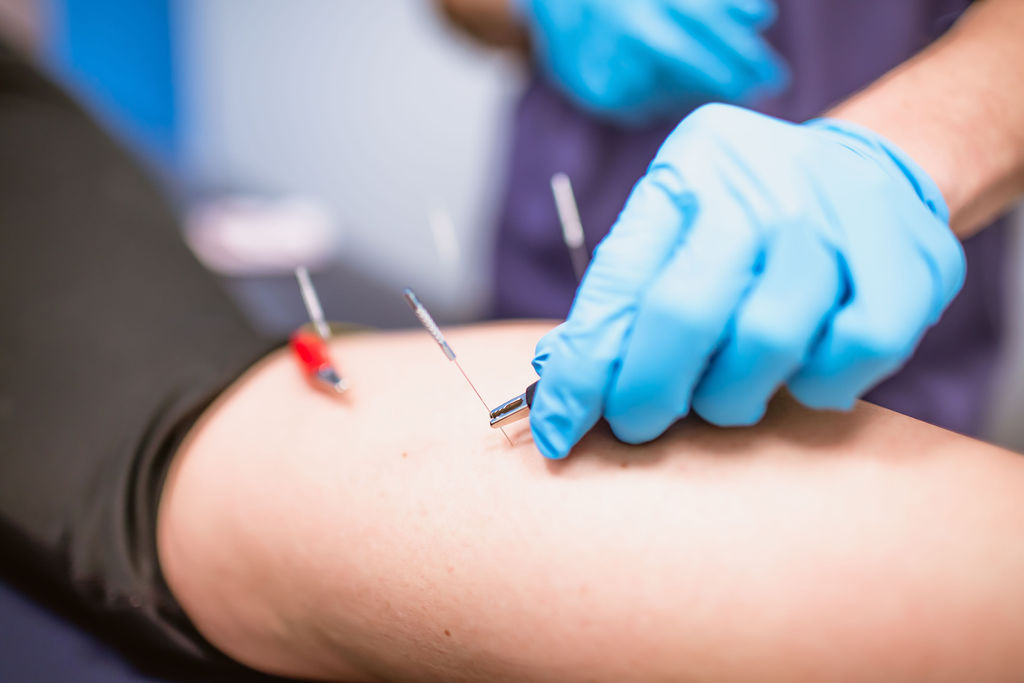
Our Dry Needling Approach
We combine thorough movement and pain assessments with evidence-based dry needling protocols. Your personalized plan may include:
- Detailed Evaluation: Pinpointing problematic trigger points via hands-on and movement tests
- Precision Needling: Inserting thin, sterile needles to stimulate healing
- Active Reinforcement: Guided stretches and strengthening exercises immediately post-treatment
Holistic Integration: Blending manual therapy, exercise prescription, and education for optimal outcomes
Dry Needling Therapy: Advanced Treatment for Muscle Tension and Pain
When muscle pain persists despite traditional treatments, trigger point dry needling offers a solution. Our experienced therapists use this specialized technique to target specific trigger points in your muscles. By releasing these tight spots, we help restore proper muscle function and reduce pain, getting you back to your regular activities faster. This effective treatment complements our other physical therapy approaches, alleviating muscle tightness, reducing pain, and restoring function.
Carpal tunnel
Chronic low back and neck pain
Headaches and migraines
Muscle spasms
Myofascial Pain Syndrome
Plantar Fasciitis
Post-Surgical Recovery
Sciatica
Sports injuries
Sprains or Strains
Schedule an Appointment
When muscle pain persists despite traditional treatments, trigger point dry needling offers a solution. Our experienced therapists use this specialized technique to target specific trigger points in your muscles. By releasing these tight spots, we help restore proper muscle function and reduce pain, getting you back to your regular activities faster. This effective treatment complements our other physical therapy approaches, alleviating muscle tightness, reducing pain, and restoring function.
Complementary to Other Treatments
Dry needling is used in conjunction with other therapies, such as exercise and manual therapy, to optimize your treatment outcomes.
Enhanced Function
With reduced pain and improved mobility, you can perform daily activities and exercises more effectively.
Exercise
Get some exercise so you can keep the muscle loose.
Hydration
Stay hydrated to avoid muscle soreness.
Improved Mobility
By releasing tight muscles, dry needling can improve your range of motion and flexibility in the back.
Massage
Gently massage the muscle for stimulation.
Pain Relief
Dry needling can provide immediate relief of back pain by targeting trigger points directly.
Questions about Trigger Point Dry Needling Services? We’ve got answers.
Don’t see what you’re looking for?
Ask Us a QuestionAre there any side effects
Mild soreness or bruising can occur but typically resolves within 24–48 hours. We’ll provide aftercare tips to minimize discomfort.
Can I exercise after a session?
Yes, in fact, we recommend it. We encourage our patients to exercise and get back to their normal activities after dry needling. Some soreness is common, but exercise is the best way to relieve it.
How many sessions will I need?
While some experience relief in a single session, most benefit from 4–6 sessions scheduled 1–2 weeks apart, depending on your condition’s severity.
What does it feel like?
We know exactly what you’re thinking. And no, most people don’t feel the needle being inserted. That’s because the needle is so thin that you likely won’t notice anything. During the treatment, you could feel mild cramping or the same pain or tightness that you’ve been experiencing before.
What is a trigger point?
Although more commonly known as knots in the muscle, trigger points are taut bands of muscle fibers within a larger group of muscles that may cause pain over the area and lead to difficulty performing everyday tasks. Muscles with trigger points fatigue faster, have less power, and take more time to recover from activities. They are common in muscles that are overused or damaged due to an injury. Trigger points are often tender to touch and can cause pain in other areas of the body.
What's the difference between dry needling and acupuncture?
Many times, our patients ask us how trigger point dry needling is different from acupuncture. Acupuncture is widely known as an eastern medicinal practice that aims to improve Qi, the flow of energy in the body, whereas dry needling is rooted in western medicine and addresses musculoskeletal diagnoses. We recommend trigger point dry needling because it is a more individualized treatment that fits into a patient’s larger physical therapy care. It also improves pain and mobility in fewer sessions than acupuncture.